

The machine learned your name
Chapter 04: But you never signed on the dotted line

❥ This email may be truncated in your inbox. To be sure you’re reading the entire post, please read it in a web browser.
❥♩ This chapter was born to [On the Nature of Daylight — Max Richter] Listen while you read.
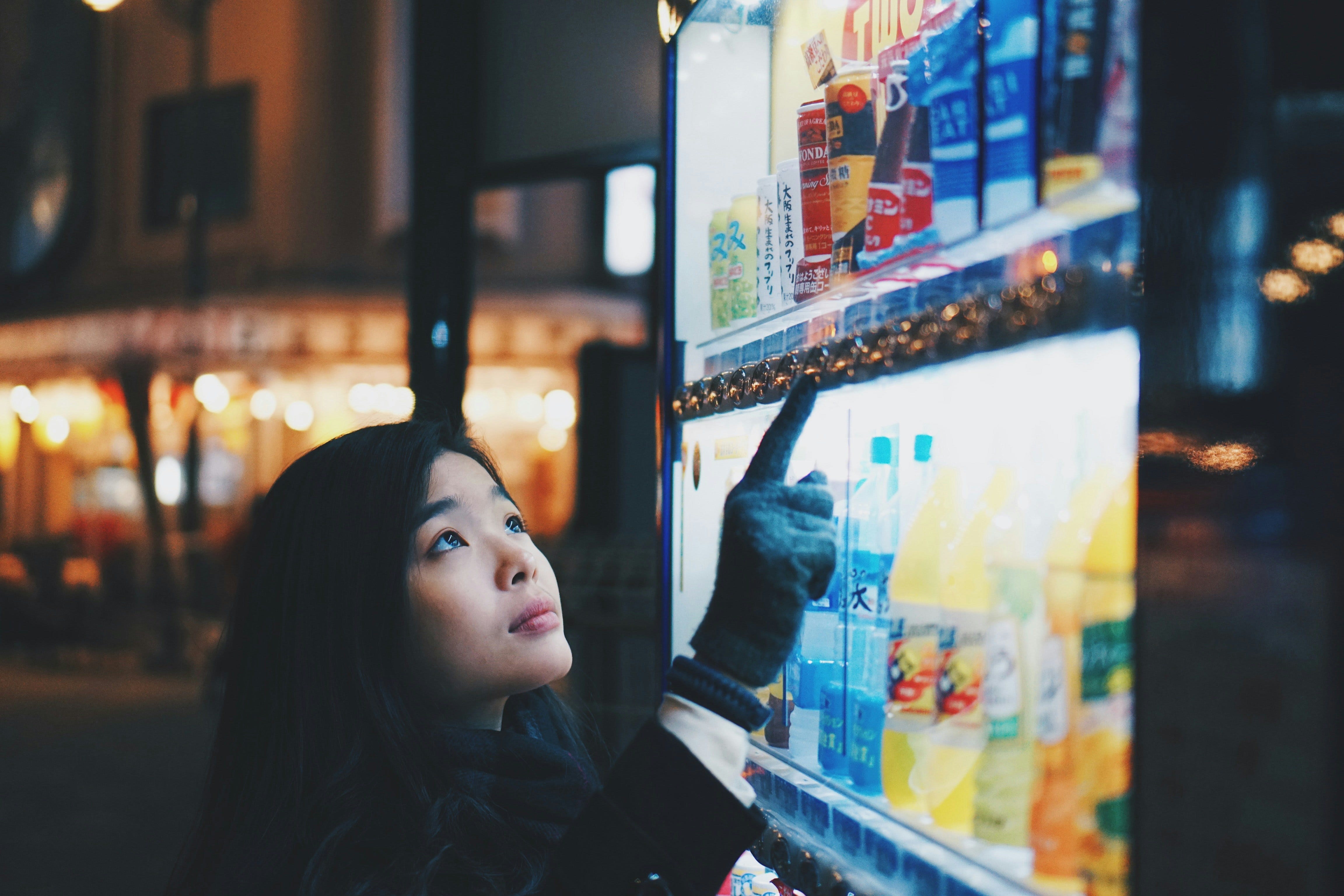
About fifteen years ago, a dear friend came back from Japan with a story that feels like it was told yesterday.
No coins required for vending machines. All you had to do to get a drink was to watch a thirty-second ad. First invented in 2007, and already running across the country by the time she described it to me over dinner.
We talked about what we value most in life, aside from money and time. Connection. Nature. Trust. But this vending machine suggested something none of us had a word for yet.
Attention. Your undivided, uninterrupted, thirty-second gaze — worth exactly one cold drink.
I took that question into my branding workshops not long after. I’d ask the room: what’s the most valuable thing in the world right now? Not one person guessed it. They said time. Talent. Another said trust. Nobody said attention.
That was fifteen years ago. Now it’s a catchphrase. Millionaire influencers post about it between brand deals and motivational one-liners. The idea got there eventually. But the machine in Japan understood it first.
And once attention became the most valuable thing in the world — everything that followed makes a terrible kind of sense.
When did you last remember an ad that was pushed into your line of sight? Not sought, not chosen — just placed there, between you and whatever you actually came for. We’ve grown so used to it we stopped noticing. That’s not tolerance. That’s surrender.
Imagine the internet had been designed differently. Where a search engine asked for your preferences and matched them to what you actually needed. Where merchants found you because the fit was genuine — not because they outbid someone else for your eyeballs. Where you paid for Spotify because you wanted the artist to eat.
Instead someone, somewhere, built this.
The machine that learned your name
In 1953, a psychologist named B.F. Skinner put a pigeon in a box. He rigged it so that pressing a lever would sometimes — not always, but sometimes — release food. The pigeon pressed the lever. Got nothing. Pressed again. Nothing…
Then food. Then nothing, nothing, nothing, food.
The pigeon couldn’t stop.
Skinner had accidentally discovered the most powerful behavioural loop ever documented. The guaranteed reward merely trains behaviour. The unpredictable reward creates addiction. The not-knowing is more powerful than the getting. The almost is more consuming than the never.
But here’s what the pigeon never lost. No money. No time it couldn’t recover.
We, on the other hand… aren’t so lucky.
Casinos understood this before Silicon Valley did. Slot machines were engineered around Skinner’s discovery — the loop with no natural end, the reward you knew existed but couldn’t predict, the lever cheap enough to pull one more time. The house didn’t need you to win. It needed you to stay inside the loop.
Then someone looked at that architecture and thought: what if we scaled it?
Facebook’s first president later admitted they had deliberately exploited a vulnerability in human psychology — engineering a loop of social validation so frictionless and unpredictable that users couldn’t leave. The like button was Skinner’s lever, dressed in blue.
In 2006, a software engineer named Aza Raskin built the infinite scroll — the feature that removes the natural pause between one page and the next, replacing it with an endless, frictionless stream of more. No bottom. No breath. No moment where the glass empties and your brain wakes up and says maybe I should stop.
He later calculated that his invention wastes the equivalent of 200,000 human lifetimes every single day. He has spent years since trying to undo what thirty minutes of coding set in motion.
What Raskin stumbled into became a blueprint. Every platform since has refined it into a four-part machine. And once you see it, you cannot unsee it.
The never-ending loop
No finish line. No natural stopping point. The architecture is continuous by design — because the moment you stop, the revenue stops.
The opportunity you know exists
You keep scrolling because the value is real. A post that moves you. A match.
A deal. A like from someone whose opinion matters. The reward exists — it just arrives on a schedule only the algorithm controls.
The unpredictable reward
Skinner’s pigeon, scaled to over five billion people. Something good is in there. You just don’t know when. That uncertainty is the pull. The anticipation is where the dopamine lives.
The cost of one more try is nothing
One tap. One swipe. One scroll. So negligible it never registers as a decision. The gap between not deciding and deciding is where hours disappear and whole evenings go.
We lose something much harder to recover than time. The ability to stay with something long enough to truly perceive it. The depth that makes life feel like life. The sensitivity that makes us harder to manipulate.
That last one is not a coincidence.
Four mechanics. One machine. Running through every corner of our lives.
Social media
IG, FB, TikTok, YT, Snapchat, Pinterest, LinkedIn, X. Every feed, every story, every notification timed to arrive just as you were about to put the phone down.
Dating apps
Tinder, Bumble, Hinge. Swipe right. Maybe a match. Maybe not. The lever, this time dressed up as love.
The gig economy
Uber drivers chasing surge pricing that appears and vanishes unpredictably. The loop that never quite pays enough to stop.
Trading and finance
Robinhood, Coinbase, every crypto app that celebrates your trade with confetti and a sound effect lifted straight from a casino floor.
Entertainment
Netflix autoplay, YouTube autoplay, Spotify’s Discover Weekly. Aza Raskin’s scroll, now living inside every screen in every room.
Wellness and learning
Duolingo streaks. Miss one day and lose everything you’ve built. That’s not education. That’s a hostage situation dressed in a friendly green owl.
E-commerce
Amazon’s only 2 left in stock. The flash sale ending in eleven minutes. The frequently bought together that appears the moment your guard is down.
Even the platforms built for depth (the one you're reading from) are feeling the pull. The haven for long-form thought recently repositioned itself in the App Store — videos first.
This isn’t a list of villains — or at least, none of them wore the costume. Most of them told themselves they were building something useful. Some of them, like Raskin, still carry the weight of what they made.
And we’re not innocent bystanders. We chose the convenience. We pressed the lever too — knowingly, willingly, gratefully at first. The system didn’t force its way in. We left the door open and it learned our name.
But intention doesn’t change architecture. And the architecture was always the same.
Someone figured out that if you removed the moment of choice — the pause and the gap between one thing and the next — you could keep a human being inside a loop indefinitely.
That person was not thinking about your attention. They were thinking about what it was worth and how to extract every last drop of it.
But the attention economy’s deepest damage isn’t measured in hours. It’s measured in what becomes automatic. Skimming. Scrolling. Swiping. Done so repeatedly, so frictionlessly, that perception shifts into auto-pilot — and auto-pilot, by definition, is not present. It’s just moving.
And a person on auto-pilot cannot taste the difference in a bowl of phở in Hanoi made by a woman who has done nothing else for forty years. Cannot be stopped by a weaver in Jaipur who can tell the quality of silk just by the sound it makes. Cannot smell the wood smoke in a Oaxacan kitchen where the mole takes three days. Cannot see the difference between something made with a lifetime of care and something printed overnight in a factory in Guangzhou.
The machine didn’t just take your time. It made not-noticing a habit.
What we traded without noticing
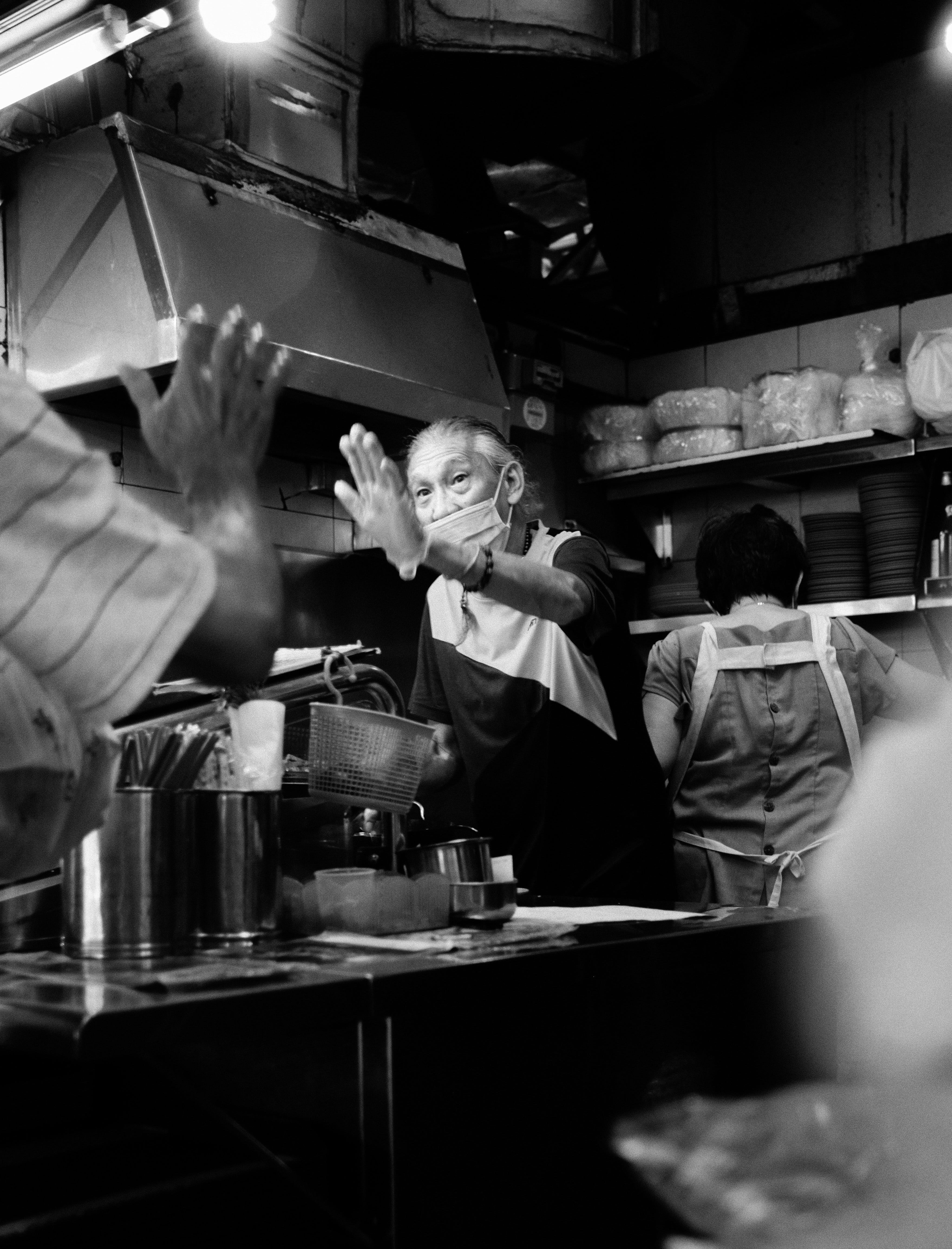
There was an uncle in Singapore who woke at the break of dawn every morning.
He had done it for decades. By the time the city stirred, he had already deboned the chicken, prepared the rice, mixed the ginger and scallion sauce to a ratio that existed nowhere except in his hands. He ran one stall. And when my dad visited me in Singapore — I was twelve, newly arrived, far from home — we would find our way to his table in the hawker centre, sit under the ceiling fans, and eat Hainanese chicken rice for three dollars a plate.
Tender and juicy. The sauce exactly right. The kind of taste that Re;minded me of the flavour of Singapore… because it was never a recipe. It was a human with a lifetime of small adjustments, accumulated in the hands, refined through years of practice until the body itself became the library.
It lives in hands. When the body stops, it stops.
That was the bargain an entire generation of hawkers made: back-breaking work, six days a week, so the next generation could have something easier.
The children took the easier life. The stall closed. The recipe, a hundred years in the making, went with it.
Nobody documented it. Nobody thought to… It was just lunch.
This is happening everywhere, in every language, across every craft that was ever built by a specific human body over a specific lifetime.
In Japan, artisanal weaving mills still exist that produce fabric of such precision and quality that fashion labels have to apply to work with them — not the other way around. The mills choose who is worthy of their cloth. They cannot meet global demand and have decided, quietly and without apology, that they will not try. The average artisan is sixty years old. No successor is coming.
Designer Ken Sakata, who moved his operations to Japan to work with what remains, put it simply:
The goal is not to remind people of what Japan has made, but what Japan wants to make with the time it has left…
In Europe, cathedrals took generations to build. Not one architect saw completion. The people who laid the first stones knew they would die before the spire rose. They built anyway… for something larger than their own lifetime. Walk into one now and something in the body recognises the weight of that intention even across centuries.
Then consider what we build now, when the brief is efficiency and the budget is quarterly.
A modern airport. A shopping mall. A co-working space. Every city, every country — same fonts, same exposed brick, same motivational neon sign on the same whitewashed wall. A dead plant in the corner, dried to a crisp, ignored so long nobody remembers when it was alive. And then we go home to a shoebox with a view of another shoebox, designed by someone who never once asked what it would feel like to be human inside these walls.
Nothing in you stirs in any of these places. Because nothing in them asked anything of you.
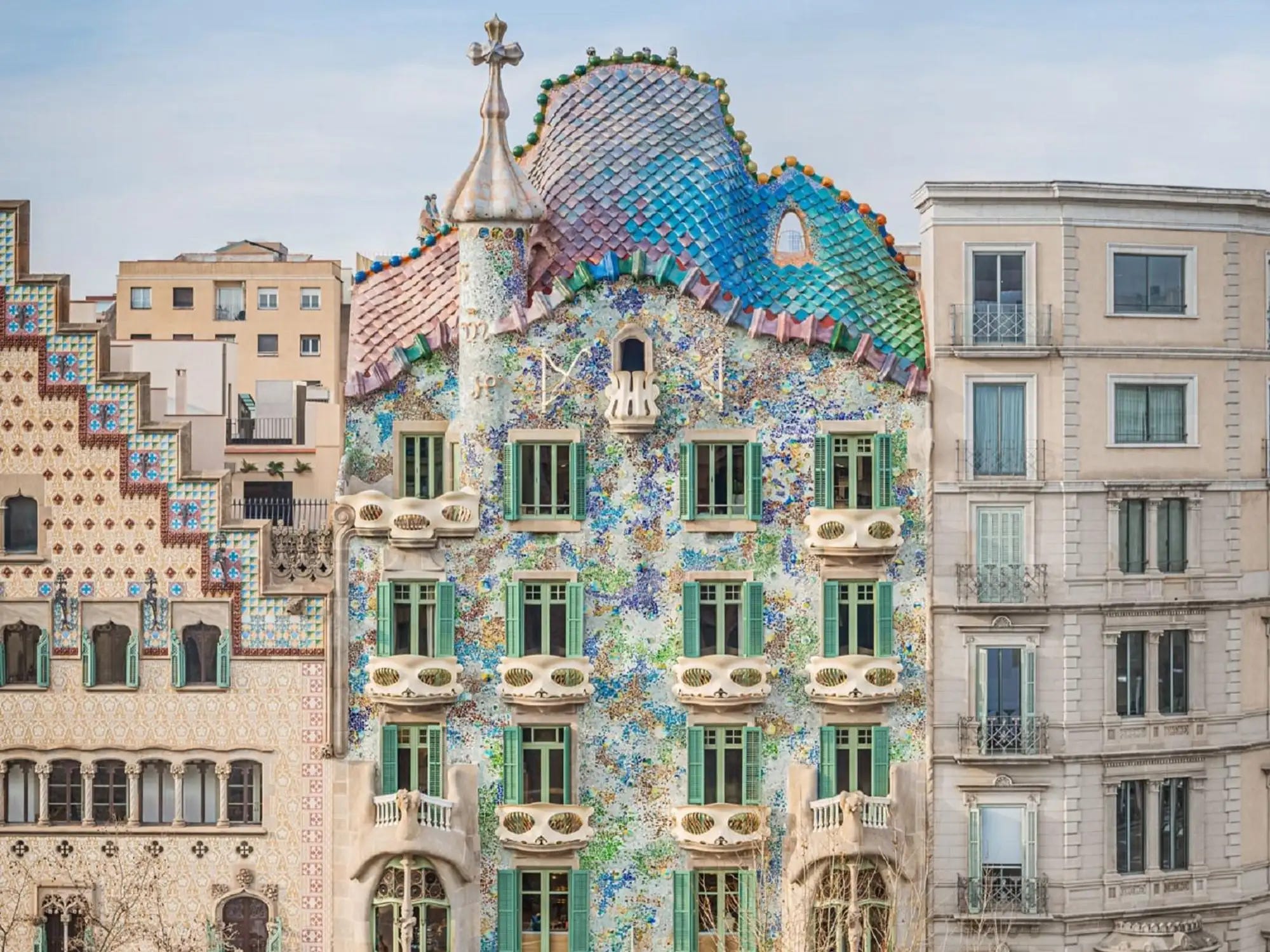
This is the contrast nobody talks about because it happened slowly. The silent, cumulative replacement of things made with devotion by things made at scale. Of the uncle who woke at the break of dawn with the franchise that opens at ten.
The handmade, the hand-grown, the hand-built — they still exist. But they have become rare. And rare, in a market economy, means costly. Which means they have become the province of the 16%. The ones with enough disposable income to discern between quality and convenience, meaning and efficiency, the specific and the interchangeable.
The other 84% inherit what’s left. The copy of the copy of the copy. Each generation further from the source, and fewer people alive who remember what the source tasted like.
Most people won’t notice what’s gone until the last stall closes. Until the last uncle retires with no one to hand the ladle to…
By then, the recipe will already be gone.
What we traded without noticing was our sensitivity. Not just to food, or craft, or beauty — but to value itself. The ability to feel the difference between something made with care and something manufactured for scale. The ability to stay with something long enough to truly perceive it.
That is not a small loss. A person who has lost that sensitivity cannot be moved. Cannot be reached. Cannot tell when something is real.
And a person who cannot tell when something is real is very easy to sell to.
The system that was designed this way
Before the food reaches your plate, someone decided what goes into the soil.
The pesticide enters the crop. The crop enters the body. The body then gets sick, the doctor writes a prescription, the dependency creates debt — and the family inherits a bill large enough to bury themselves with it.
In some of the world’s wealthiest nations, this is not a tragedy. It’s a business model.
The food industry understood long before anyone admitted it that the most profitable product is the one you cannot stop eating. Salt, sugar, crunch — engineered for irresistibility. Even kale crisps. Satisfaction ends the loop. Irresistibility continues it.
The pharmaceutical industry operates on the same logic, at higher stakes. Treat the symptom. Maintain the dependency. Never cure the root. A cured patient is a lost customer. A dependent one is a revenue stream. Doctors are measured by how many services they perform, not by how many people they keep well.
Here’s something we never notice: a drawerful of cables, unused.
Every few years, a new connector. A new incompatibility engineered so silently it arrives as inconvenience rather than intention. Perfectly functional devices rendered obsolete not because they stopped working — but because the thing that charged them no longer fits. It took the European Union passing legislation to make Apple adopt a universal standard. That tells you everything about who it was built to serve.
This thread deserves its own room.
I’m not ready to pull on it in passing… I’ll come back to it properly.
Every system described in this chapter shares the same architecture. Engineer what goes in. Manage what breaks. Extract everything in between — our labour, our attention, our health, our time — and call it commerce. The system was never designed to ask what the body was built for. Only what it could extract.
The body was not designed to be managed. It was designed to feel.
Language can be misunderstood. A word means different things in different mouths. A sentence lands differently depending on who is holding the wound.
But there is one language that needed no translation long before words existed at all.
A mother’s face when she sees her newborn for the first time looks exactly the same in Nairobi as it does in Oslo. In Karachi. In Lima. Exhaustion, pain… and relief and terror and a love so large it has no name — all of it written on a face that every human alive already knows how to read.
No words.
Just the oldest language we all share.
Vision is the window for human emotion. What we see becomes what we feel… before the mind has had a chance to argue.
For 300,000 years — since the first humans walked out of Africa and spread across every continent — this has been true. Our bodies have always been the gateway of understanding.
When our ancestors returned from the hunt, they didn’t file a report. They danced. They moved the experience through their bodies — the fear, the triumph, the grief, the relief — so it didn’t calcify inside them. What is not expressed in the body does not disappear. It stays.
This capacity — to feel, to transmit feeling, to receive it — is the source. Every piece of art that has ever moved you began in a body that felt something it could not ignore.
Which is why what happened next matters so much.
The deepest work is never made at the entrance
In the Ardèche region of southern France, there is a cave.
Inside it are some of the oldest figurative artworks ever discovered — drawings so skilled, so alive, so precise in their rendering of movement and breath, that when researchers first dated them they assumed there must have been a mistake. Surely these couldn’t be 36,000 years old.
What stops me is not their age. It’s where they are.
The most decorated chambers in Chauvet Cave sit at the deepest point.
The entrance itself has no paintings at all.
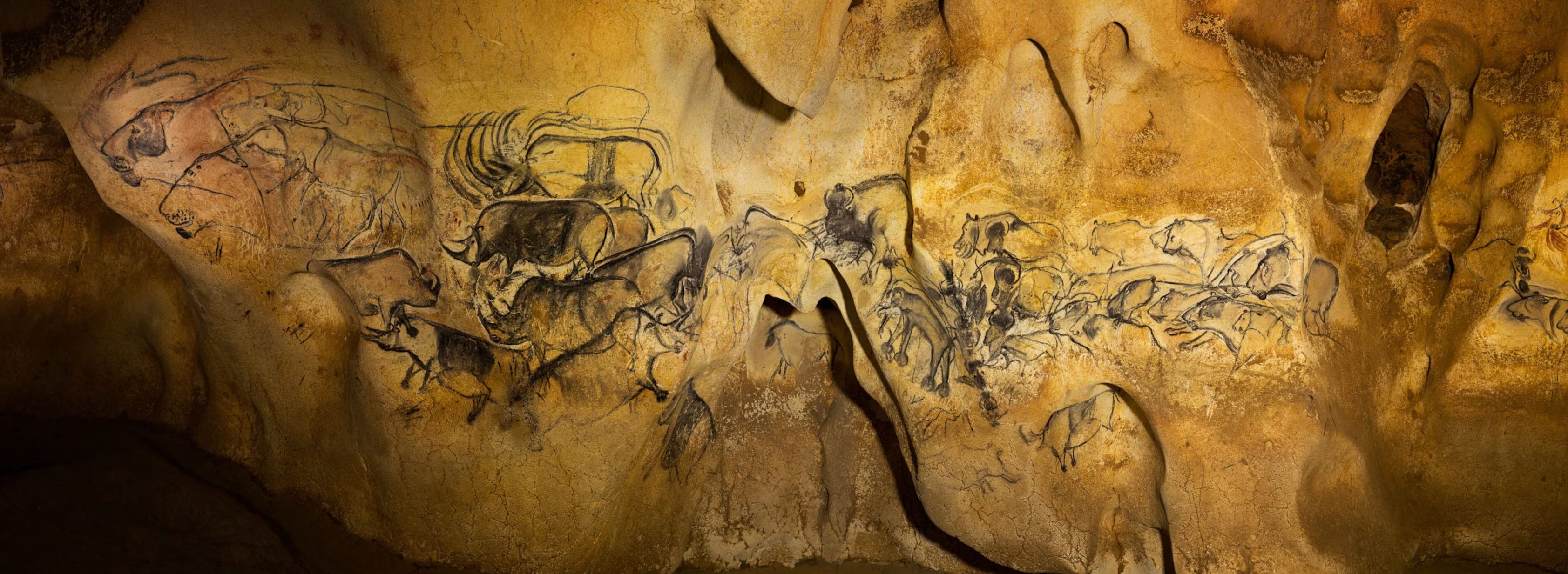
Which means they carried fire into the darkest part of the earth, with mineral pigments in their hands, to make images and tell their stories in a place no one would casually pass by.
They didn’t make art at the entrance. They went in.
We don’t know why they went that deep. Perhaps they were called to reach into the belly of the earth — to Re;turn and Re;member something more ancient than themselves. To express what could not be said above ground. Celebration. Grief. Awe. Gratitude. Shame. All of it offered to their dark confession chamber.
The deep is where you touch the real meaning of what it is to be alive. It’s where they felt safest. Where the self ends and something larger, more ancient begins.
Our bodies are the instrument. The depth is where we are tuned.
That is Rare Attention. It always was.
I write this not from contempt for the world we’ve built. I write it from grief for the one we’re losing. Because I have felt what it is to go that deep — and I know what it produces, and I know how rare it is becoming.
Now look at what the same system is doing to the only thing we should have kept sacred.
This version of the machine doesn’t extract your time or your health. It extracts something older and harder to replace — your original thought.
It writes for you. It creates for you. It keeps your children company so you don’t have to. It builds brands in seconds for people who never learned to see. And it does all of this so efficiently that the question nobody is asking is the only one that matters: if the thinking is outsourced, what exactly are you left with?
The Chauvet artists carried fire into the dark because something inside them demanded expression that only they could give. That demand — that particular, irreplaceable Human Aesthetic Intelligence — is what this technology is learning to simulate.
Simulation is not the problem. Forgetting the difference is.
They did it to food. They did it to medicine. Now they’re doing it to ideas.
And the artist who once carried fire into the dark now carries a phone into a well-lit room, producing content on a schedule, serving an algorithm — like the slot machine, like the prescription pad — whose only purpose is to extract the maximum before they burn out and are replaced.
Most creatives don’t even feel it happening — because the entrance is so well-lit, and the deep has been made to feel like a waste of time.
The language we forgot we were speaking
Language was supposed to connect us.
Instead it has become the most efficient tool for sorting us into people who understand each other — and people who never will.
Think of the last time you tried to describe a piece of music to someone who hadn’t heard it. Or explain why a particular place felt sacred. Or put into words why you loved someone. Language arrived. But the thing itself — the actual feeling — stayed just out of reach.
I have been in relationships where what I was offering had no name in the other person’s language. And I have watched that unnamed thing slowly convince me it had no value. I know now that those are not the same thing. But a numbed world treats them as identical.
That is a particular kind of loneliness. The kind that makes you question whether the nest you were building was ever meant to be shared.
I watched a couple once — strangers to me, visible only through a screen — try to find each other across a gap that had nothing to do with effort and everything to do with vocabulary. She spoke in a language built from years of interior work. Words like holding space, leaning in, my truth. He listened carefully, nodded, tried his best to appease her. But appeasement is not understanding. And she could feel the difference even if she couldn’t name it. Which is why people reach for “I just don’t feel a connection” — because the real sentence is too exposing.
You cannot see what I see. And I don’t know how to show you.
This is not a modern problem. It is a modern epidemic.
Every generation now speaks a slightly different tongue. The personal development vocabulary that signals depth to one person signals pretension to another. The imagistic shorthand of youth — closer to images than words, moving at the speed of a scroll — lands as invisible to anyone who didn’t grow up inside it.
We have more words than any humans in history.
And we are lonelier than we have ever been.
Words were always translations. The original language was never spoken.
Scale this outward. Two people who cannot find the words to see one another. Two communities. Two religions. Two races. Two generations. Two nations, each convinced their dialect is universal truth, each reading the other’s gestures as aggression or contempt rather than difference.
Every disconnection on the world stage began as a failure of perception between two people who could not find the language to see each other. Two people becomes two neighbours. Two neighbours becomes two tribes. Two tribes becomes two religions. Two religions becomes two countries standing at the edge of something irreversible.
Languages separate. They always have. They always will.
Only the body, only vision, only what we feel before we find the words — those still have a chance of reaching across.
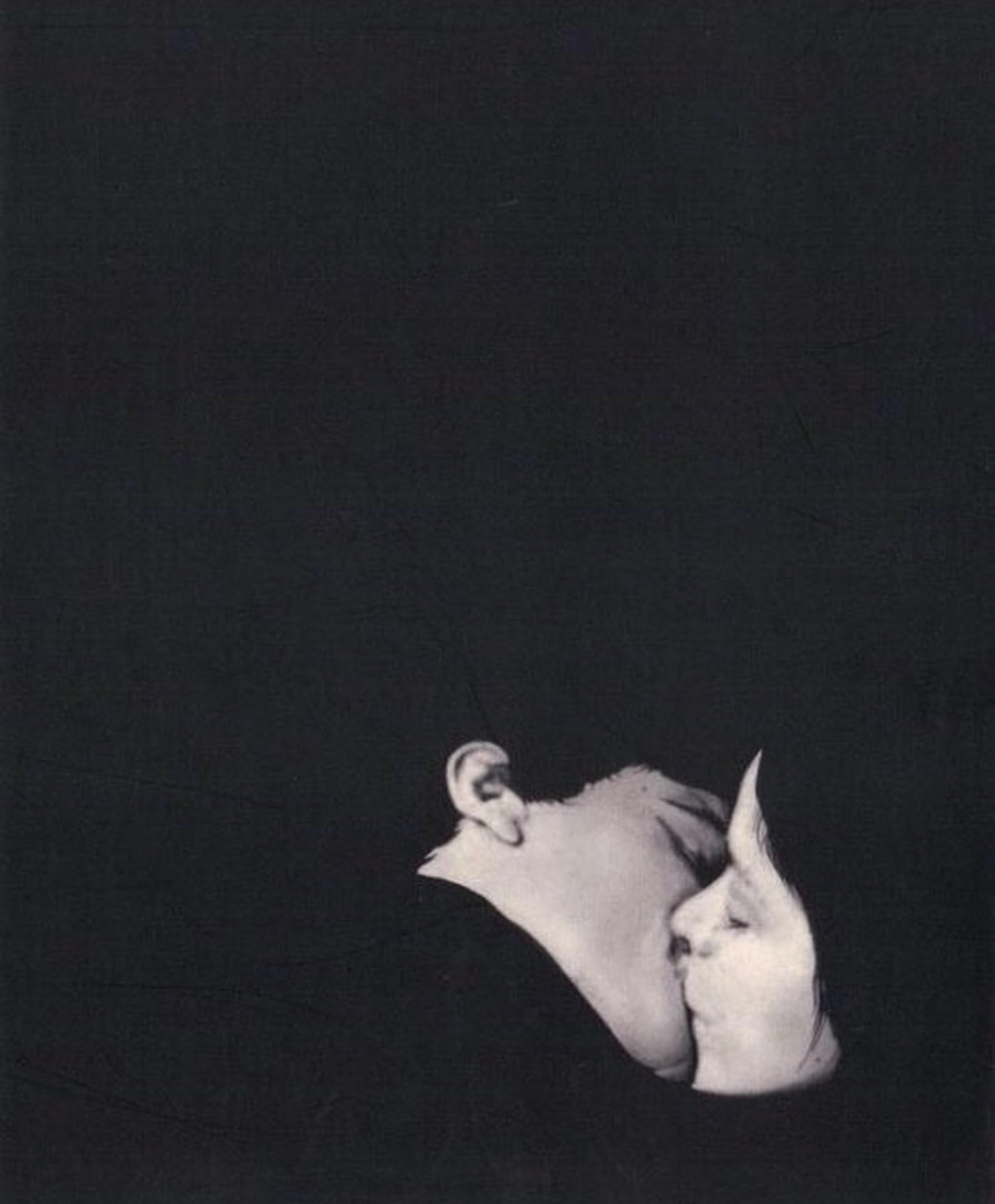
My husband and I don’t always need words. There’s a look that contains an entire conversation. That shared language — built over years of paying rare attention to each other — is one of the rarest forms of wealth I know. He is the mountain to my river.
The tension between two polarities is not a problem to solve.
It is where beauty lives.
But beauty is only valued when the other person understands what beauty is.
We met the way most people meet now — through a screen, a profile, the algorithm’s best guess at compatibility. On our second date, he took out his phone, opened the app that had brought us together, and deleted it in front of me. Without a word.
I felt safe before my mind had finished understanding what I’d seen.
No words. No promises he couldn’t keep. No time wasted. No negotiation. Just a gesture that meant:
You are the one. From here, only you.
That is visual language at full capacity — his ability to show rather than say, and mine to receive what was shown without needing it translated. Technology had been our path to each other. And then he had the wisdom to put it down.
This is still possible. People still do this. The capacity is not gone.
But it requires the ability to be present enough to make a gesture that means something. To receive it. To let it land in the body before the mind starts negotiating.
It requires Rare Attention.
And that — all of that — is exactly what we have been giving away.
Re;membering what we were before the machine learned our name
We began this chapter with a question asked in a workshop, years ago, before the answer had become a millionaire’s catchphrase.
What is the most valuable thing in the world?
It’s the particular quality of being seen — by another person, by a piece of music that finds you in the dark, by a space built as if your nervous system mattered, by a meal made with the kind of care that takes a lifetime to learn and a single generation to lose.
It’s the 36,000-year-old hand that carried fire into the deepest part of the earth because something inside demanded expression that only that particular body, in that particular darkness, could give.
We were built for depth. We were built to feel. We were built to see each other across every distance — of language, of culture, of generation, of fear and shame— using the oldest tools we have.
The body. The gesture. The look that contains an entire conversation.
I know what you’re thinking. Awareness changes nothing. Seeing the machine doesn’t dismantle it. Knowing the pigeon’s loop doesn’t stop your thumb from scrolling.
And you’re right. Knowledge alone is not the medicine.
But something happens when you truly see it — not as a news story, not as a statistic, not as someone else’s problem — but as the exact shape of your own life. Something shifts…
Not in the world.
In you.
The machine runs on your attention. The moment you withdraw it, the machine stops. Not slows. Stops.
You were the power source the whole time.
Chapter 5 is about taking back what’s yours.

And once attention became the most valuable thing in the world — everything that followed makes a terrible kind of sense. —- the commercialisation and commodification of attention… such a killer point. It’s hard to see how we escape from the infinite scrolling and reduced attention spans …
I kept wanting to stop reading so many times, simply because there were so many points where I wanted to make notes, or to sit with what you had said ... but I'm at work. And I can't take notes but I wanted to comment, to tell you how intelligent and beautiful I found this. Thank you for sharing it.